
Tell your friends about this item:
Through the Looking-Glass Lewis Carroll
Our customers say:


Also available as:
- Paperback Book (2025) Íkr 1,409
- Book (2023) Íkr 1,549
- Paperback Book (2017) Íkr 1,749
- Paperback Book (2018) Íkr 1,749
- Paperback Book (2015) Íkr 1,859
- Paperback Book (2016) Íkr 1,859
- Paperback Book (2015) Íkr 1,859
- Paperback Book (2016) Íkr 1,859
- Paperback Book (2014) Íkr 1,859
- Paperback Book (2017) Íkr 1,859
- Paperback Book (2016) Íkr 1,859
- Paperback Book (2016) Íkr 1,889
- Paperback Book (2017) Íkr 1,899
- Paperback Book (2016) Íkr 1,899
- Paperback Book (2018) Íkr 1,949
- Paperback Book (2016) Íkr 1,949
- Paperback Book (2017) Íkr 1,959
- Paperback Book (2015) Íkr 1,959
- Paperback Book (2016) Íkr 1,959
- Paperback Book (2016) Íkr 1,959
- Paperback Book (2016) Íkr 2,069
- Book (2023) Íkr 2,069
- Hardcover Book (2025) Íkr 2,089
- Paperback Book (2015) Íkr 2,099
- Paperback Book (2017) Íkr 2,099
Through the Looking-Glass
Lewis Carroll
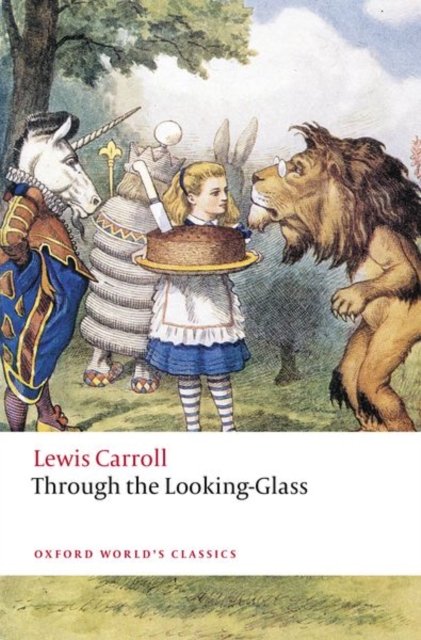
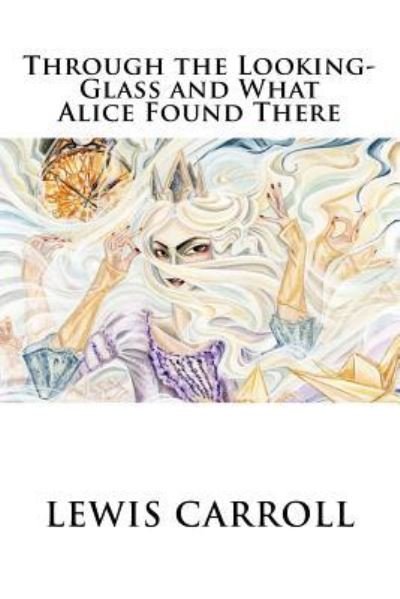
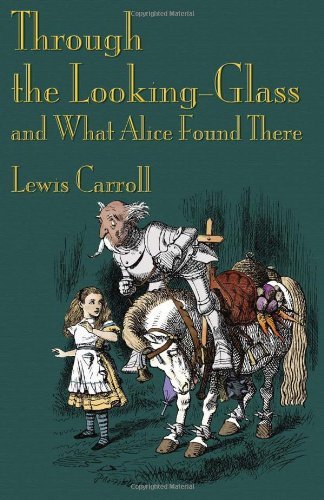
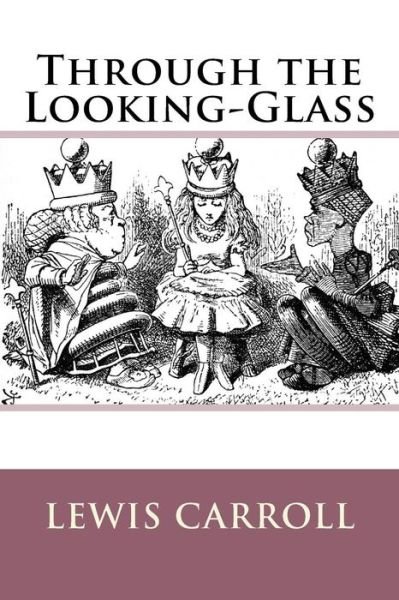
1871 (the first) edition, illustrated"Through the Looking-Glass, and What Alice Found There" (1871) is a novel by Lewis Carroll, the sequel to "Alice's Adventures in Wonderland" (1865). Set some six months later than the earlier book, Alice again enters a fantastical world, this time by climbing through a mirror into the world that she can see beyond it."Through the Looking-Glass" includes such celebrated verses as "Jabberwocky" and "The Walrus and the Carpenter", and the episode involving Tweedledum and Tweedledee. The themes and settings of Through the Looking-Glass make it a kind of mirror image of Wonderland: the first book begins outdoors, in the warm month of May, uses frequent changes in size as a plot device, and draws on the imagery of playing cards; the second opens indoors on a snowy, wintry night exactly six months later (November), uses frequent changes in time and spatial directions as a plot device, and draws on the imagery of chess. Whereas the first book has the deck of cards as a theme, this book is based on a game of chess, played on a giant chessboard with fields for squares. Most main characters in the story are represented by a chess piece or animals, with Alice herself being a pawn. The looking-glass world is divided into sections by brooks or streams, with the crossing of each brook usually signifying a notable change in the scene and action of the story: the brooks represent the divisions between squares on the chessboard, and Alice's crossing of them signifies advancing of her piece one square.
| Media | Books Paperback Book (Book with soft cover and glued back) |
| Released | February 9, 2017 |
| ISBN13 | 9781520560885 |
| Pages | 122 |
| Dimensions | 152 × 229 × 7 mm · 190 g |
| Language | English |
More by Lewis Carroll
Show all


![Cover for Lewis Carroll · Alice's Adventures in Wonderland and Through the Looking-Glass - Word Cloud Classics (Paperback Book) [2nd edition] (2025)](https://imusic.b-cdn.net/images/item/original/586/9781667209586.jpg?lewis-carroll-2025-alice-s-adventures-in-wonderland-and-through-the-looking-glass-word-cloud-classics-paperback-book&class=scaled&v=1730122679)




![Cover for Lewis Carroll · Alice's Adventures in Wonderland and Through the Looking-Glass (Keepsake Edition) - Crafted Classics (Paperback Book) [Keepsake edition] (2024)](https://imusic.b-cdn.net/images/item/original/121/9781645176121.jpg?lewis-carroll-2024-alice-s-adventures-in-wonderland-and-through-the-looking-glass-keepsake-edition-crafted-classics-paperback-book&class=scaled&v=1721078500)

![Cover for Lewis Carroll · Alice’s Adventures in Wonderland (Paperback Book) [Editionsecond edition] (2024)](https://imusic.b-cdn.net/images/item/original/013/9789355226013.jpg?lewis-carroll-2024-alice-s-adventures-in-wonderland-paperback-book&class=scaled&v=1747602192)
![Cover for Lewis Carroll · Alice in Wonderland: A Norton Critical Edition - Norton Critical Editions (Paperback Book) [Fourth edition] (2024)](https://imusic.b-cdn.net/images/item/original/608/9781324059608.jpg?lewis-carroll-2024-alice-in-wonderland-a-norton-critical-edition-norton-critical-editions-paperback-book&class=scaled&v=1698085785)
![Cover for Lewis Carroll · Penguin Readers Level 3: Alice Through the Looking Glass: Abridged Edition - Penguin Readers (Paperback Book) [Abridged edition] (2024)](https://imusic.b-cdn.net/images/item/original/763/9780241636763.jpg?lewis-carroll-2024-penguin-readers-level-3-alice-through-the-looking-glass-abridged-edition-penguin-readers-paperback-book&class=scaled&v=1695046260)


![Cover for Lewis Carroll · Penguin Readers Level 2: Alice's Adventures in Wonderland (ELT Graded Reader): Abridged Edition - Penguin Readers (Paperback Book) [Abridged edition] (2023)](https://imusic.b-cdn.net/images/item/original/864/9780241588864.jpg?lewis-carroll-2023-penguin-readers-level-2-alice-s-adventures-in-wonderland-elt-graded-reader-abridged-edition-penguin-readers-paperback-book&class=scaled&v=1656953982)



More from this series
![Cover for Lewis Carroll · Through the Looking-Glass (Collector's Edition) (Laminated Hardback with Jacket) (Hardcover Book) [Collector's edition] (2024)](https://imusic.b-cdn.net/images/item/original/512/9781998667512.jpg?lewis-carroll-2024-through-the-looking-glass-collector-s-edition-laminated-hardback-with-jacket-hardcover-book&class=scaled&v=1762184709)
![Cover for Lewis Carroll · Through the Looking-Glass (Deluxe Library Edition) (Illustrated) (Hardcover Book) [Deluxe Library edition] (2020)](https://imusic.b-cdn.net/images/item/original/943/9781774379943.jpg?lewis-carroll-2020-through-the-looking-glass-deluxe-library-edition-illustrated-hardcover-book&class=scaled&v=1638099801)
![Cover for Lewis Carroll · Through the Looking-Glass (Royal Collector's Edition) (Illustrated) (Case Laminate Hardcover with Jacket) (Hardcover Book) [Royal Collector's edition] (2021)](https://imusic.b-cdn.net/images/item/original/465/9781774761465.jpg?lewis-carroll-2021-through-the-looking-glass-royal-collector-s-edition-illustrated-case-laminate-hardcover-with-jacket-hardcover-book&class=scaled&v=1641820738)

See all of Lewis Carroll ( e.g. Paperback Book , Hardcover Book , Book , CD and Audiobook (CD) )