
Tell your friends about this item:
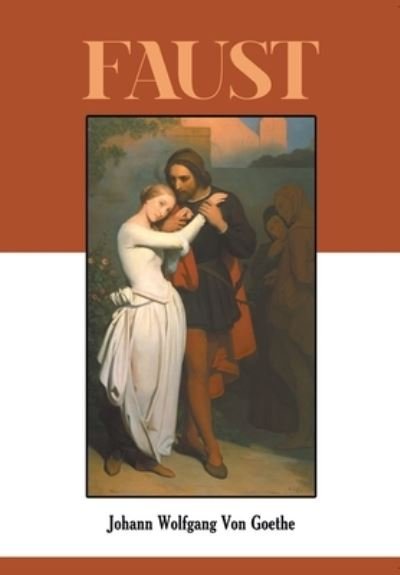
Faust: Annotated Johann Wolfgang Von Goethe


Faust: Annotated
Johann Wolfgang Von Goethe
Publisher Marketing: Johann Wolfgang von Goethe's Faust is a tragic play in two parts: Faust. Der Tragodie erster Teil translated as: Faust: The First Part of the Tragedy) and Faust. Der Tragodie zweiter Teil (Faust: The Second Part of the Tragedy). Although rarely staged in its entirety, it is the play with the largest audience numbers on German-language stages. Faust is Goethe's most famous work and considered by many to be one of the greatest works of German literature. The principal characters of Faust Part One include: Heinrich Faust, a scholar, sometimes said to be based on the real life of Johann Georg Faust, or on Jacob Bidermann's dramatized account of the Legend of the Doctor of Paris, Cenodoxus Mephistopheles, a Devil (Demon) Gretchen, Faust's love (short for Margaret; Goethe uses both forms) Marthe, Gretchen's neighbour Valentin, Gretchen's brother Wagner, Faust's famulus Faust Part One takes place in multiple settings, the first of which is heaven. Mephistopheles makes a bet with God: he says that he can lure God's favourite human being (Faust), who is striving to learn everything that can be known, away from righteous pursuits. The next scene takes place in Faust's study where Faust, despairing at the vanity of scientific, humanitarian and religious learning, turns to magic for the showering of infinite knowledge. He suspects, however, that his attempts are failing. Frustrated, he ponders suicide, but rejects it as he hears the echo of nearby Easter celebrations begin. He goes for a walk with his assistant Wagner and is followed home by a stray poodle (the term then meant a medium-to-big-size dog, similar to a sheep dog). In Faust's study, the poodle transforms into the devil (Mephistopheles). Faust makes an arrangement with the devil: the devil will do everything that Faust wants while he is here on Earth, and in exchange Faust will serve the devil in Hell. Faust's arrangement is that if he is pleased enough with anything the devil gives him that he wants to stay in that moment forever, then he will die in that moment. When the devil tells Faust to sign the pact with blood, Faust complains that the devil does not trust Faust's word of honor. In the end, Mephistopheles wins the argument and Faust signs the contract with a drop of his own blood. Faust has a few excursions and then meets Margaret (also known as Gretchen). He is attracted to her and with jewellery and help from a neighbor, Martha, the devil draws Gretchen into Faust's arms. With influence from the devil, Faust seduces Gretchen. Gretchen's mother dies from a sleeping potion, administered by Gretchen to obtain privacy so that Faust could visit her. Gretchen discovers she is pregnant. Gretchen's brother condemns Faust, challenges him and falls dead at the hands of Faust and Mephistopheles. Gretchen drowns her illegitimate child and is convicted of the murder. Faust tries to save Gretchen from death by attempting to free her from prison. Finding that she refuses to escape, Faust and the devil flee the dungeon, while voices from Heaven announce that Gretchen shall be saved - "Sie ist gerettet" - this differs from the harsher ending of Urfaust - "Sie ist gerichtet!" - "she is condemned." It was reported that members of the first-night audience familiar with the original Urfaust version cheered on hearing the amendment. Review Citations: Choice 01/01/2015 pg. 806 (EAN 9780300189698, Paperback) Audio File 12/01/2011 pg. 57 (EAN 9781843795490, Compact Disc) - *Starred Review Library Journal 03/15/2012 pg. 80 (EAN 9781843795490, Compact Disc) Contributor Bio: Ukray, Murat Thomas Wright (1810 - 1877) was an English antiquarian and writer. Wright was born near Ludlow, Shropshire, descended from a Quaker family formerly living at Bradford, West Riding of Yorkshire. He was educated at Ludlow Grammar School and at Trinity College, Cambridge, where he graduated in 1834. While at Cambridge he contributed to the Gentleman's Magazine and other periodicals, and in 1835 he came to London to devote himself to a literary career. His first separate work was Early English Poetry in Black Letter, with Prefaces and Notes (1836, 4 vols. 12mo), which was followed during the next forty years by an extensive series of publications, many of lasting value. He helped to found the British Archaeological Association and the Percy Society, the Camden and the Shakespeare Society. In 1842 he was elected corresponding member of the Academie des Inscriptions et Belles Lettres of Paris, and was a fellow of the Society of Antiquaries as well as member of many other learned British and foreign bodies. In 1859 he superintended the excavations of the Roman town of Viroconium Cornoviorum (Wroxeter), near Shrewsbury, and issued a report. A portrait of him is in the Drawing Room Portrait Gallery for 1 October 1859. He was a great scholar, but will be chiefly remembered as an industrious antiquary and the editor of many relics of the Middle Ages. He died at Chelsea, London in his 67th year. He is buried in Brompton Cemetery. Contributor Bio: Clarke, Harry Although now best known for his stained glass work, Harry Clarke (1889-1931) first found fame as a book illustrator. His edition of The Fairy Tales of Hans Christian Andersen was followed by illustrated editions of Edgar Allan Poe's Tales of Mystery and Imagination, The Years at the Spring, Charles Perrault's Fairy Tales of Perrault, and Goethe's Faust.
| Media | Books Paperback Book (Book with soft cover and glued back) |
| Released | August 12, 2014 |
| ISBN13 | 9781500819989 |
| Publishers | Createspace |
| Pages | 320 |
| Dimensions | 140 × 216 × 18 mm · 408 g |
More by Johann Wolfgang Von Goethe
Show all





See all of Johann Wolfgang Von Goethe ( e.g. Paperback Book , Hardcover Book , Book , CD and Sewn Spine Book )