
Tell your friends about this item:
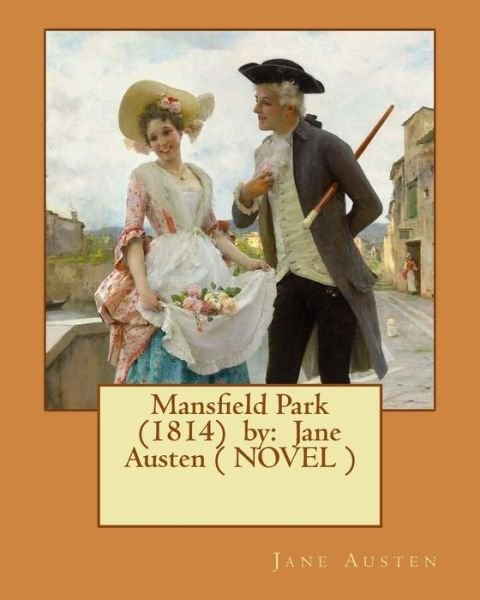
Mansfield Park Jane Austen
Our customers say:


Also available as:
-
Paperback BookReissue edition(1983) Íkr 1,339
- Paperback Book (2008) Íkr 1,339
- Paperback Book (2008) Íkr 1,419
- Paperback Book (2008) Íkr 1,449
- Paperback Book (2003) Íkr 1,449
- Paperback Book (1993) Íkr 1,609
- Book (2023) Íkr 1,639
- Paperback Book (2014) Íkr 1,659
- Book (2025) Íkr 1,779
- Paperback Book (2006) Íkr 1,859
- Hardcover Book (2025) Íkr 1,879
- Paperback Book (2017) Íkr 1,889
- Paperback Book (2017) Íkr 1,999
- Paperback Book (2017) Íkr 2,019
- Paperback Book (2018) Íkr 2,119
- Paperback Book (2024) Íkr 2,139
- Paperback Book (2018) Íkr 2,149
- Paperback Book (2018) Íkr 2,149
- Paperback Book (2017) Íkr 2,219
- Book (2026) Íkr 2,239
- Paperback Book (2017) Íkr 2,259
- Paperback Book (2017) Íkr 2,259
- Paperback Book (2015) Íkr 2,349
- Paperback Book (2017) Íkr 2,369
- Paperback Book (2018) Íkr 2,369
Mansfield Park
Jane Austen
Publisher Marketing: A young girl named Fanny Price comes to live with her wealthy uncle and aunt, Sir Thomas and Lady Bertram. Fanny's family is quite poor; her mother, unlike her sister Lady Bertram, married beneath her, and Fanny's father, a sailor, is disabled and drinks heavily. Fanny is abused by her other aunt, Mrs. Norris, a busybody who runs things at Mansfield Park, the Bertrams' estate. The Bertram daughters, Maria and Julia, are shallow, rather cruel girls, intent on marrying well and being fashionable. The elder son, Tom, is a roustabout and a drunk. Fanny finds solace only in the friendship of the younger son, Edmund, who is planning to be a clergyman. Fanny grows up shy and deferential, caught as she typically is between members of the Bertram family. Sir Thomas leaves Mansfield Park for Antigua, where he owns plantations. In his absence, two new figures arrive at Mansfield: Henry and Mary Crawford, the brother and sister of the local minister's wife. Henry and Mary are attractive and cheerful, and they soon become indispensable members of the Mansfield circle. Henry flirts extensively with Maria, who is engaged to marry the boring but wealthy Rushworth. He also flirts with Julia when it suits his purposes. At first, Mary is interested in Tom, the older son and heir, but she soon realizes that he is boring and not really interested in her. She finds herself increasingly attracted to Edmund, although the prospect of marrying a clergyman does not appeal to her, and she is often cruel to him on this account. In the meantime, Fanny has innocently fallen in love with Edmund, although she does not even admit this to herself. Yates, a visiting friend of Tom's, proposes that the group should put on a play. His idea is eagerly received by all except for Edmund and Fanny, who are horrified at the idea of acting. The play goes on anyways, however; Maria and Henry, as well as Mary and Edmund (who has been prevailed upon to take a role to avoid bringing in an outsider to play it), get to play some rather racy scenes with one another. When one of the women cannot make a rehearsal, Fanny is pressured to take a role. She is almost forced to give in when Sir Thomas makes a sudden entrance, having arrived from Antigua. Sir Thomas is unhappy about the play and quickly puts a stop to the improprieties. Since Henry has not declared his love, Maria is married to Rushworth. She and Julia leave Mansfield Park for London. Relationships between the Crawfords and the Bertrams intensify. Edmund nearly proposes to Mary several times, but her condescension and amorality always stop him at the last minute. He confides his feelings to Fanny, who is secretly upset by them. In the meantime, on a lark, Henry has decided to woo Fanny. He is surprised to find himself sincerely in love with her. Fanny has become indispensable as a companion to her aunt and uncle, and on the occasion of her brother William's visit, they give a ball in her honor. Some time after the ball, Henry helps William get a promotion in the Navy. Using this as leverage, he proposes to Fanny, who is mortified and refuses. He continues to pursue her. Her uncle is disappointed that she has refused such a wealthy man, and, as an indirect result, she is sent to stay with her parents in their filthy house. Meanwhile, Edmund has been ordained and continues to debate over his relationship with Mary, to Fanny's dismay. Henry comes to see Fanny at her parents' and renews his suit. He then leaves to take care of business on his estate. Fanny continues to receive letters from Mary encouraging her to take Henry's proposal. A series of events then happen in rapid succession: Tom Bertram falls dangerously ill as a result of his partying and nearly dies; Henry, who has gone not to his estate but to see friends, has run off with the married Maria; Julia, upset over her sister's rash act, elopes with Yates, Tom's friend. Julia and Yates are reconciled to the family. Edmund finally comes and marries Fanny Review Citations: Audio File 04/01/2009 pg. 58 (EAN 9781400106912, Compact Disc) Audio File 04/01/2009 pg. 58 (EAN 9781400136919, Compact Disc) School Library Journal 08/01/1998 (EAN 9780553479461, Analog Audio Cassette) Library Journal 02/01/1996 pg. 104 (EAN 9780679601944, Hardcover) Wilson Fiction Catalog 01/01/2006 pg. 34 (EAN 9780679412694, Hardcover) Wilson Fiction Catalog 01/01/2010 pg. 24 (EAN 9780679412694, Hardcover) Wilson Fiction Catalog 01/01/2014 pg. 28 (EAN 9780679412694, Hardcover) Contributor Bio: Austen, Jane One of England's most beloved authors, Jane Austen wrote such classic novels as Pride and Prejudice, Sense and Sensibility, Emma, and Northanger Abbey. Published anonymously during her life, Austen's work was renowned for its realism, humour, and commentary on English social rites and society at the time. Austen's writing was supported by her family, particularly by her brother, Henry, and sister, Cassandra, who is believed to have destroyed, at Austen's request, her personal correspondence after Austen's death in 1817. Austen's authorship was revealed by her nephew in A Memoir of Jane Austen, published in 1869, and the literary value of her work has since been recognized by scholars around the world. Contributor Bio: Ukray, Murat William Shakespeare (564 - 1616) was an English poet, playwright, and actor, widely regarded as the greatest writer in the English language and the world's pre-eminent dramatist. He is often called England's national poet and the "Bard of Avon." His extant works, including some collaborations, consist of about 38 plays, 154 sonnets, two long narrative poems, and a few other verses, of which the authorship of some is uncertain. His plays have been translated into every major living language and are performed more often than those of any other playwright. Shakespeare was born and brought up in Stratford-upon-Avon. At the age of 18, he married Anne Hathaway, with whom he had three children: Susanna, and twins Hamnet and Judith. Between 1585 and 1592, he began a successful career in London as an actor, writer, and part-owner of a playing company called the Lord Chamberlain's Men, later known as the King's Men. He appears to have retired to Stratford around 1613 at age 49, where he died three years later. Few records of Shakespeare's private life survive, and there has been considerable speculation about such matters as his physical appearance, sexuality, religious beliefs, and whether the works attributed to him were written by others. Shakespeare produced most of his known work between 1589 and 1613. His early plays were mainly comedies and histories and these works remain regarded as some of the best work produced in these genres. He then wrote mainly tragedies until about 1608, including Hamlet, Othello, King Lear, and Macbeth, considered some of the finest works in the English language. In his last phase, he wrote tragicomedies, also known as romances, and collaborated with other playwrights. Many of his plays were published in editions of varying quality and accuracy during his lifetime. In 1623, John Heminges and Henry Condell, two friends and fellow actors of Shakespeare, published the First Folio, a collected edition of his dramatic works that included all but two of the plays now recognised as Shakespeare's. It was prefaced with a poem by Ben Jonson, in which Shakespeare is hailed, presciently, as "not of an age, but for all time." His plays remain highly popular today and are constantly studied, performed, and reinterpreted in diverse cultural and political contexts throughout the world.
| Media | Books Paperback Book (Book with soft cover and glued back) |
| Released | September 4, 2014 |
| ISBN13 | 9781501065804 |
| Publishers | Createspace |
| Pages | 520 |
| Dimensions | 152 × 229 × 30 mm · 752 g |
More by Jane Austen
Show all


![Cover for Jane Austen · Mansfield Park - Penguin Classics Deluxe Edition (Paperback Book) [Penguin Classics Deluxe edition] (2026)](https://imusic.b-cdn.net/images/item/original/716/9780143138716.jpg?jane-austen-2026-mansfield-park-penguin-classics-deluxe-edition-paperback-book&class=scaled&v=1750730679)
![Cover for Jane Austen · Northanger Abbey - Penguin Classics Deluxe Edition (Paperback Book) [Penguin Classics Deluxe edition] (2026)](https://imusic.b-cdn.net/images/item/original/723/9780143138723.jpg?jane-austen-2026-northanger-abbey-penguin-classics-deluxe-edition-paperback-book&class=scaled&v=1754306415)




More from this series


![Cover for Jane Austen · Mansfield Park (Perennial Favorites Collection) (Paperback Book) [Lrg Rep edition] (2010)](https://imusic.b-cdn.net/images/item/original/681/9781410429681.jpg?jane-austen-2010-mansfield-park-perennial-favorites-collection-paperback-book&class=scaled&v=1410097167)
![Cover for Jane Austen · Mansfield Park (Royal Collector's Edition) (Case Laminate Hardcover with Jacket) (Hardcover Book) [Royal Collector's edition] (2021)](https://imusic.b-cdn.net/images/item/original/999/9781774765999.jpg?jane-austen-2021-mansfield-park-royal-collector-s-edition-case-laminate-hardcover-with-jacket-hardcover-book&class=scaled&v=1638221689)



![Cover for Jane Austen · Mansfield Park - Flame Tree Collectable Classics (Hardcover Book) [New edition] (2019)](https://imusic.b-cdn.net/images/item/original/980/9781787556980.jpg?jane-austen-2019-mansfield-park-flame-tree-collectable-classics-hardcover-book&class=scaled&v=1565789821)

![Cover for Jane Austen · Mansfield Park - Macmillan Collector's Library (Hardcover Book) [New edition] (2016)](https://imusic.b-cdn.net/images/item/original/718/9781909621718.jpg?jane-austen-2016-mansfield-park-macmillan-collector-s-library-hardcover-book&class=scaled&v=1471691670)

![Cover for Jane Austen · Mansfield Park - Modern Library Classics (Paperback Book) [New edition] (2001)](https://imusic.b-cdn.net/images/item/original/815/9780375757815.jpg?jane-austen-2001-mansfield-park-modern-library-classics-paperback-book&class=scaled&v=1398642691)
![Cover for Jane Austen · Mansfield Park - The Complete Jane Austen Collection (Paperback Book) [New edition] (2019)](https://imusic.b-cdn.net/images/item/original/750/9781782264750.jpg?jane-austen-2019-mansfield-park-the-complete-jane-austen-collection-paperback-book&class=scaled&v=1566843955)

See all of Jane Austen ( e.g. Paperback Book , Book , Hardcover Book , CD and Audiobook (CD) )