
Tell your friends about this item:
Heretics G K Chesterton
Our customers say:


Also available as:
- Paperback Book (2018) Íkr 1,659
- Paperback Book (2018) Íkr 1,719
- Paperback Book (1905) Íkr 1,829
- Paperback Book (2017) Íkr 1,829
- Paperback Book (2015) Íkr 1,879
- Paperback Book (2014) Íkr 1,939
- Paperback Book (2017) Íkr 2,029
- Paperback Book (2018) Íkr 2,029
- Paperback Book (2017) Íkr 2,029
- Paperback Book (2019) Íkr 2,109
- Paperback Book (2013) Íkr 2,139
- Paperback Book (2014) Íkr 2,139
- Paperback Book (2016) Íkr 2,139
- Paperback Book (2016) Íkr 2,139
- Paperback Book (2011) Íkr 2,139
- Paperback Book (2020) Íkr 2,149
- Paperback Book (2015) Íkr 2,169
- Paperback Book (2018) Íkr 2,169
- Paperback Book (2013) Íkr 2,239
- Paperback Book (2019) Íkr 2,319
- Paperback Book (2011) Íkr 2,409
- Paperback Book (2011) Íkr 2,459
- Paperback Book (2018) Íkr 2,519
- Paperback Book (2018) Íkr 2,549
- Paperback Book (2017) Íkr 2,599
Heretics
G K Chesterton
G. K. Chesterton, the "Prince of Paradox," is at his witty best in this collection of twenty essays and articles from the turn of the twentieth century. Focusing on "heretics" - those who pride themselves on their superiority to Christian views - Chesterton appraises prominent figures who fall into that category from the literary and art worlds. Luminaries such as Rudyard Kipling, George Bernard Shaw, H. G. Wells, and James McNeill Whistler come under the author's scrutiny, where they meet with equal measures of his characteristic wisdom and good humor. In addition to incisive assessments of well-known individuals ("Mr. Rudyard Kipling and Making the World Small" and "Mr. H. G. Wells and the Giants"), these essays contain observations on the wider world. "On Sandals and Simplicity," "Science and the Savages," "On Certain Modern Writers and the Institution of the Family," "On Smart Novelists and the Smart Set," and "Slum Novelists and the Slums" reflect the main themes of Chesterton's life's work. Heretics roused the ire of some critics for censuring contemporary philosophies without providing alternatives; the author responded a few years later with a companion volume, Orthodoxy. Sardonic, jolly, and generous, both books are vintage Chesterton... Gilbert Keith Chesterton, KC*SG (29 May 1874 - 14 June 1936), was an English writer, philosopher, lay theologian, and literary and art critic. He has been referred to as the "prince of paradox". Time magazine has observed of his writing style: "Whenever possible Chesterton made his points with popular sayings, proverbs, allegories-first carefully turning them inside out."Chesterton created the fictional priest-detective Father Brown, and wrote on apologetics. Even some of those who disagree with him have recognised the wide appeal of such works as Orthodoxy and The Everlasting Man. Chesterton routinely referred to himself as an "orthodox" Christian, and came to identify this position more and more with Catholicism, eventually converting to Catholicism from High Church Anglicanism. George Bernard Shaw, his "friendly enemy", said of him, "He was a man of colossal genius." Biographers have identified him as a successor to such Victorian authors as Matthew Arnold, Thomas Carlyle, Cardinal John Henry Newman, and John Ruskin. Early lifeChesterton was born in Campden Hill in Kensington, London, the son of Marie Louise, née Grosjean, and Edward Chesterton. He was baptised at the age of one month into the Church of England, [10] though his family themselves were irregularly practising Unitarians. According to his autobiography, as a young man he became fascinated with the occult and, along with his brother Cecil, experimented with Ouija boards. Chesterton was educated at St Paul's School, then attended the Slade School of Art to become an illustrator. The Slade is a department of University College London, where Chesterton also took classes in literature, but did not complete a degree in either subject.
| Media | Books Paperback Book (Book with soft cover and glued back) |
| Released | November 12, 2019 |
| ISBN13 | 9781707905430 |
| Publishers | Independently Published |
| Pages | 94 |
| Dimensions | 203 × 254 × 5 mm · 204 g |
| Language | English |
More by G K Chesterton
Show all


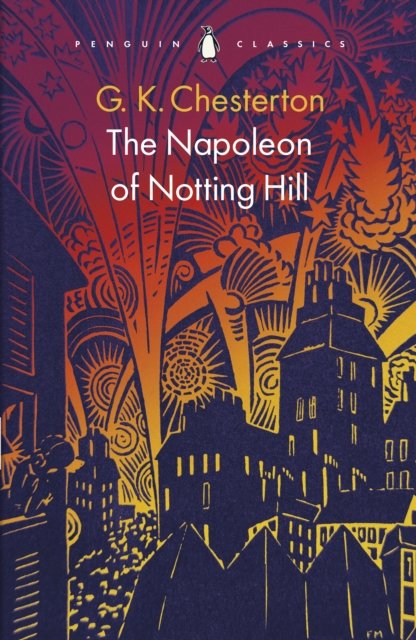




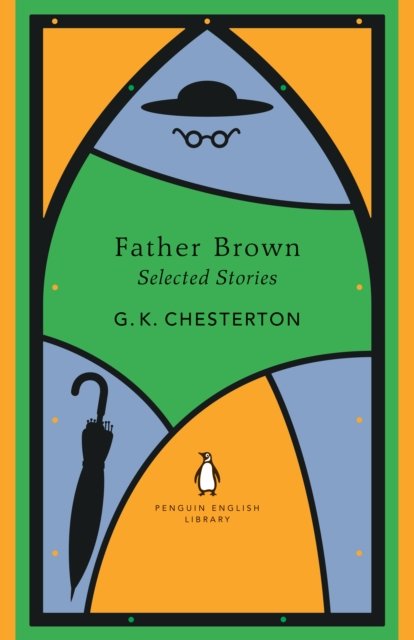

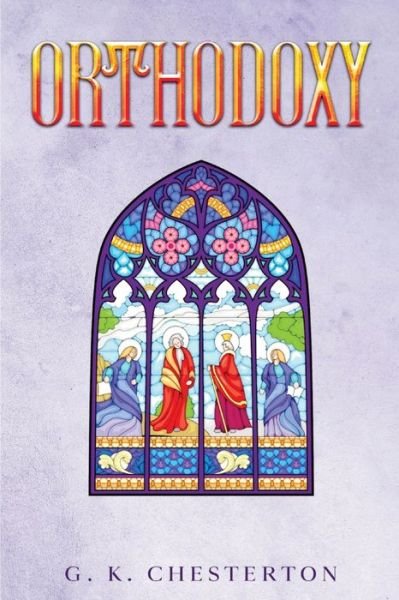








More from this series


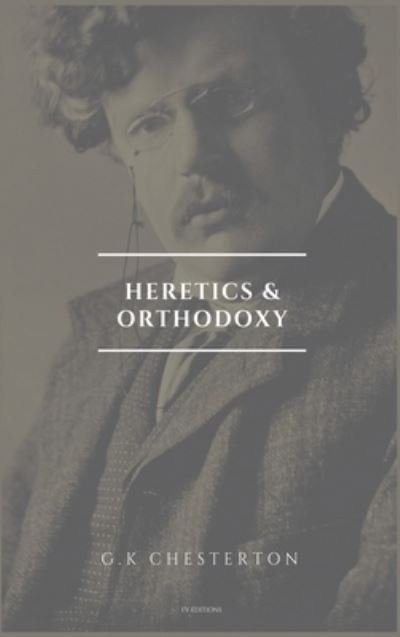
![Cover for G K Chesterton · Heretics and Orthodoxy: Easy to Read Layout (Paperback Book) [Large type / large print edition] (2021)](https://imusic.b-cdn.net/images/item/original/552/9791029911552.jpg?g-k-chesterton-2021-heretics-and-orthodoxy-easy-to-read-layout-paperback-book&class=scaled&v=1655532194)


See all of G K Chesterton ( e.g. Paperback Book , Hardcover Book , CD , Book and MP3-CD )