
Tell your friends about this item:
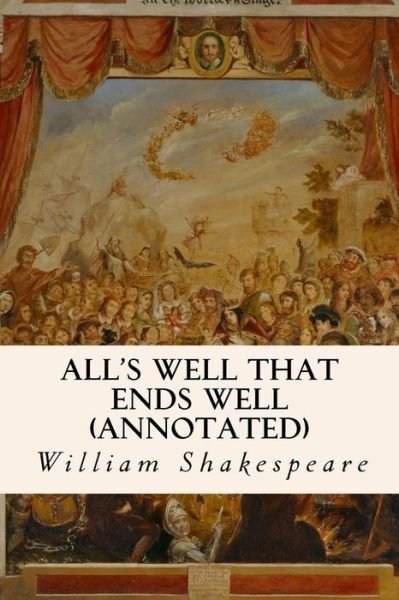
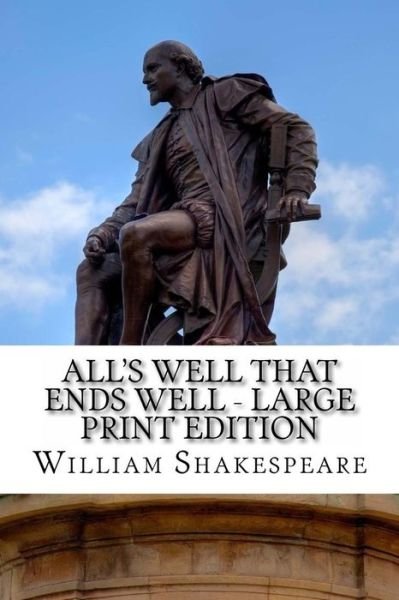
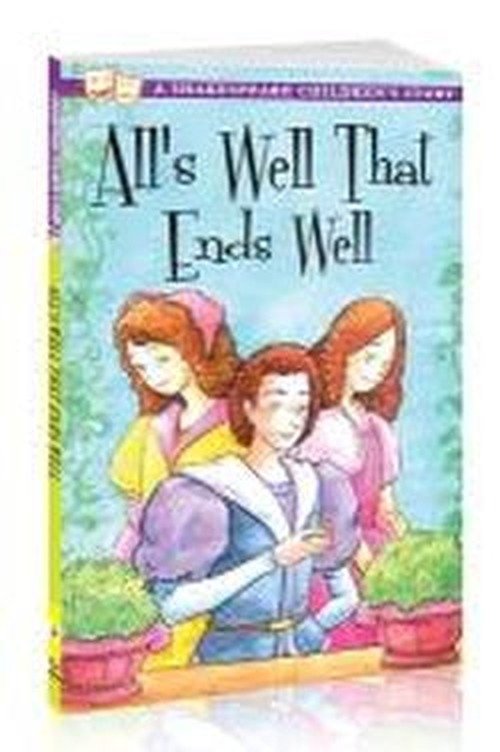
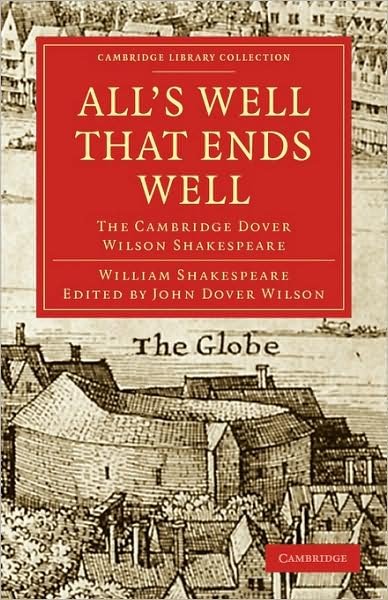
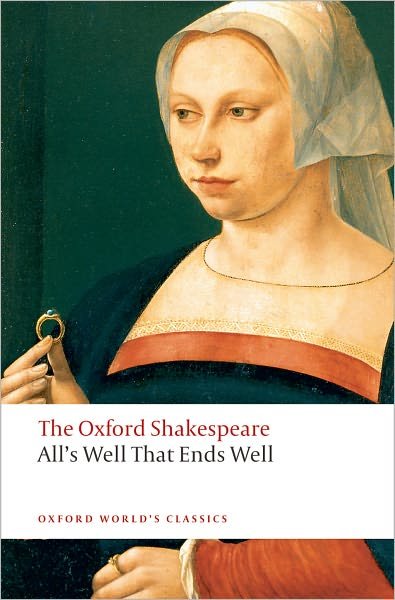
All's Well That Ends Well William Shakespeare
Our customers say:


Also available as:
-
Paperback BookRevised edition(2005) Íkr 1,439
- Paperback Book (2015) Íkr 1,639
- Paperback Book (2017) Íkr 1,699
- Paperback Book (2015) Íkr 1,739
- Paperback Book (2014) Íkr 1,749
- Paperback Book (2014) Íkr 1,749
- Paperback Book (2016) Íkr 1,749
- Paperback Book (2015) Íkr 1,749
- Paperback Book (2018) Íkr 1,749
- Paperback Book (2017) Íkr 1,779
- Paperback Book (2016) Íkr 1,809
- Paperback Book (2017) Íkr 1,809
- Paperback Book (2018) Íkr 1,859
- Paperback Book (2017) Íkr 1,859
- Paperback Book (2013) Íkr 1,859
- Paperback Book (2017) Íkr 1,869
- Paperback Book (2017) Íkr 1,869
- Paperback Book (2015) Íkr 1,889
- Paperback Book (2012) Íkr 1,929
- Paperback Book (2012) Íkr 1,929
- Paperback Book (2012) Íkr 1,929
- Paperback Book (2016) Íkr 1,969
- Paperback Book (2017) Íkr 1,969
- Paperback Book (2018) Íkr 1,969
- Paperback Book (2016) Íkr 2,039
All's Well That Ends Well
William Shakespeare
All's Well That Ends Well is a play by William Shakespeare, originally classified as a comedy, though now often counted as one of his problem plays, so-called because they cannot be easily classified as tragedy or comedy. It was probably written in later middle part of Shakespeare's career, between 1601 and 1608, and was first published in the First Folio in 1623. The name of the play comes from the proverb All's well that ends well, which means that problems do not matter so long as the outcome is good. COUNTESS. In delivering my son from me, I bury a second husband. BERTRAM. And I in going, madam, weep o'er my father's death anew; but I must attend his majesty's command, to whom I am now in ward, evermore in subjection. LAFEW. You shall find of the king a husband, madam; you, sir, a father. He that so generally is at all times good, must of necessity hold his virtue to you, whose worthiness would stir it up where it wanted, rather than lack it where there is such abundance. COUNTESS. What hope is there of his majesty's amendment?LAFEW. He hath abandon'd his physicians, madam; under whose practices he hath persecuted time with hope, and finds no other advantage in the process but only the losing of hope by time.
| Media | Books Paperback Book (Book with soft cover and glued back) |
| Released | October 14, 2020 |
| ISBN13 | 9798692787569 |
| Pages | 120 |
| Dimensions | 140 × 216 × 6 mm · 149 g |
| Language | English |
More by William Shakespeare
Show all


![Cover for William Shakespeare · Macbeth - The Alexander Shakespeare (Paperback Book) [CSEC edition] (2026)](https://imusic.b-cdn.net/images/item/original/681/9780008816681.jpg?william-shakespeare-2026-macbeth-the-alexander-shakespeare-paperback-book&class=scaled&v=1769434478)


More from this series
![Cover for William Shakespeare · All's Well That Ends Well (Modern Library Classics) (Paperback Book) [Elibron Classics Series edition] (2011)](https://imusic.b-cdn.net/images/item/original/375/9780812969375.jpg?william-shakespeare-2011-all-s-well-that-ends-well-modern-library-classics-paperback-book&class=scaled&v=1409736488)



![Cover for William Shakespeare · All's Well that Ends Well - The New Cambridge Shakespeare (Paperback Book) [Updated edition] (2004)](https://imusic.b-cdn.net/images/item/original/151/9780521535151.jpg?william-shakespeare-2004-all-s-well-that-ends-well-the-new-cambridge-shakespeare-paperback-book&class=scaled&v=1406137197)
![Cover for William Shakespeare · All's Well that Ends Well - The New Cambridge Shakespeare (Hardcover Book) [Updated edition] (2003)](https://imusic.b-cdn.net/images/item/original/935/9780521827935.jpg?william-shakespeare-2003-all-s-well-that-ends-well-the-new-cambridge-shakespeare-hardcover-book&class=scaled&v=1406137201)
See all of William Shakespeare ( e.g. Paperback Book , Hardcover Book , Book , CD and Audiobook (CD) )